
Overview
A shared forest where two children can find each other, without being told to.
Echo is a two-player forest world with no score, no win condition, no dialogue and no instructions. Most inclusive games treat social interaction as a skill to teach children with ADHD. Echo takes the opposite route: it redesigns the environment itself, so interaction between children with ADHD and their neurotypical peers can emerge on its own.
- Supervision
- Prof. Giorgio Buratti
Prof. Giuseppe Amoruso - Built with
- Unity, C#, Netcode for GameObjects
- Players
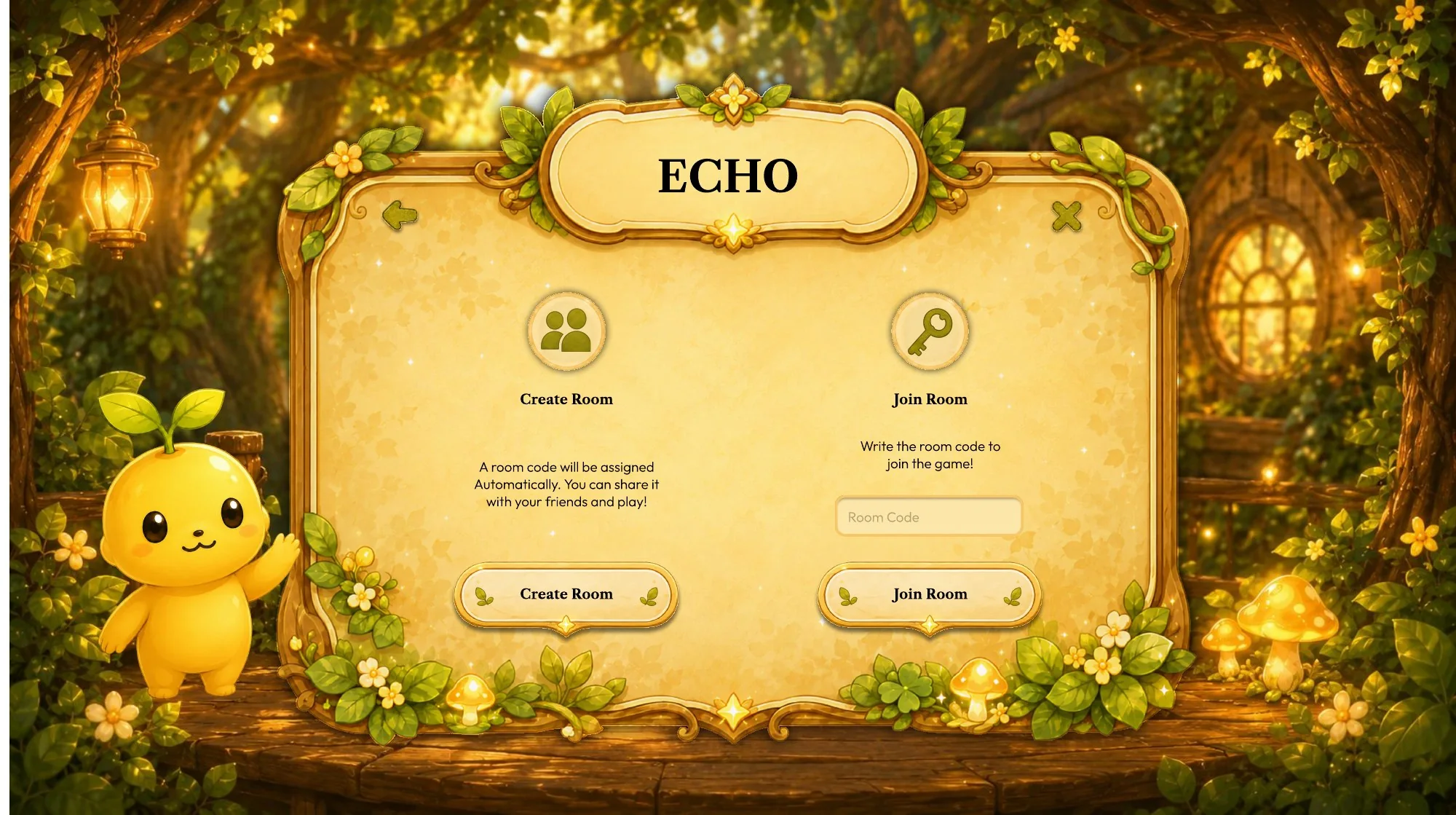
- Multiplayer, joined by a room code
Research question
How can game design create environments where social interaction emerges naturally between children with ADHD and their neurotypical peers, without instruction, predefined roles or performance-based expectations?
Approach
Design-based research, from the literature to two real play sessions.
The study followed a double diamond process. A literature review and a semi-structured interview with a professional who works directly with children with ADHD led to a design framework. The framework became a game concept and a working multiplayer prototype, which I then observed in use with two pairs of children.
The game
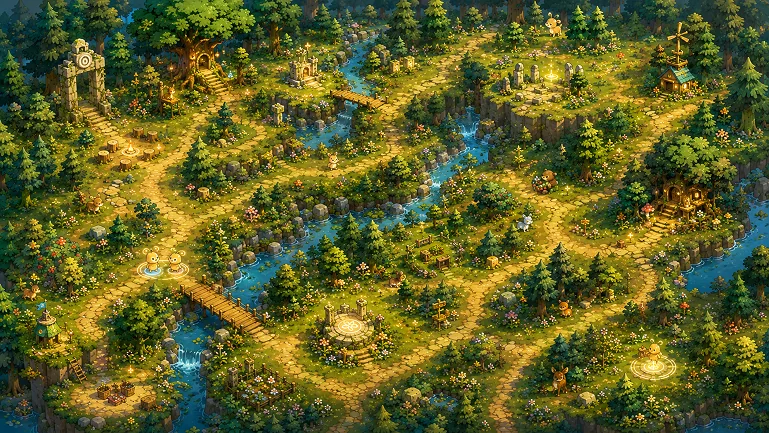
A forest without a defined path.
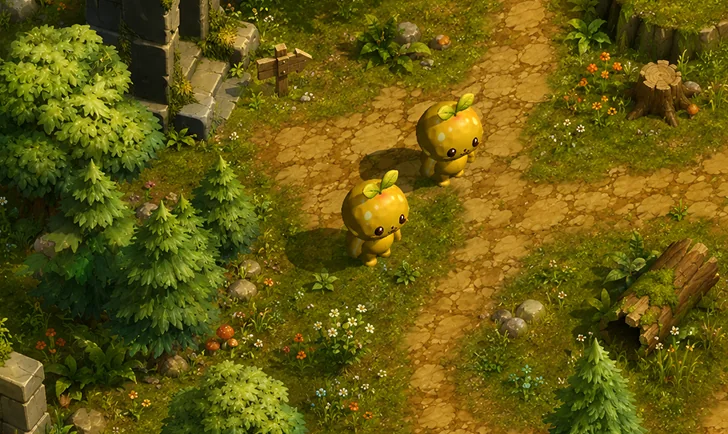
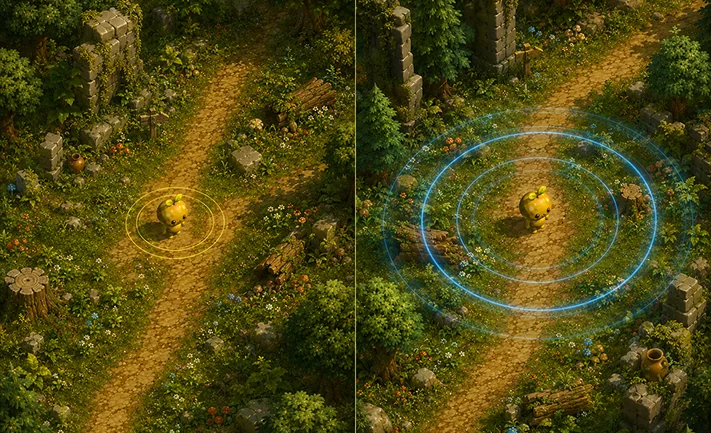
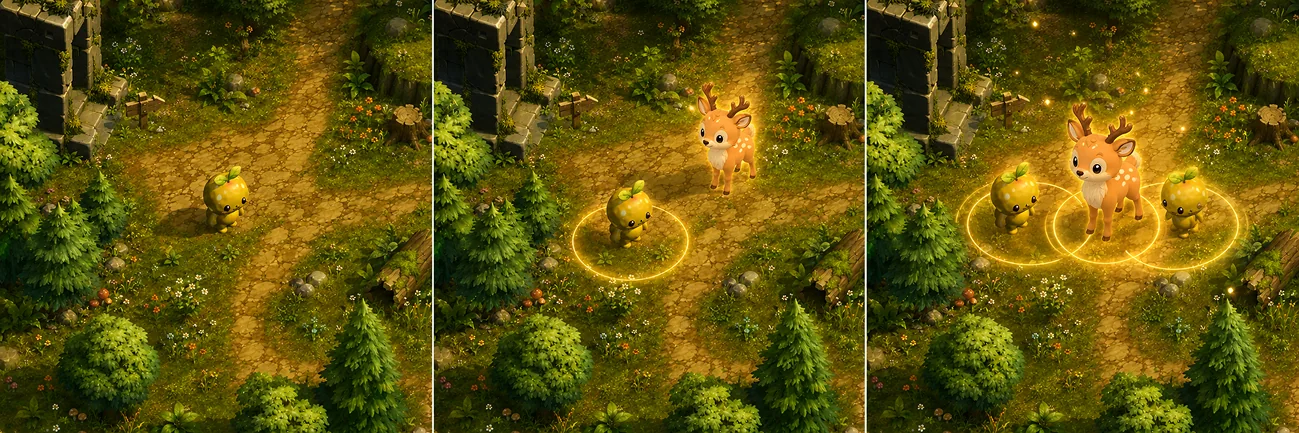
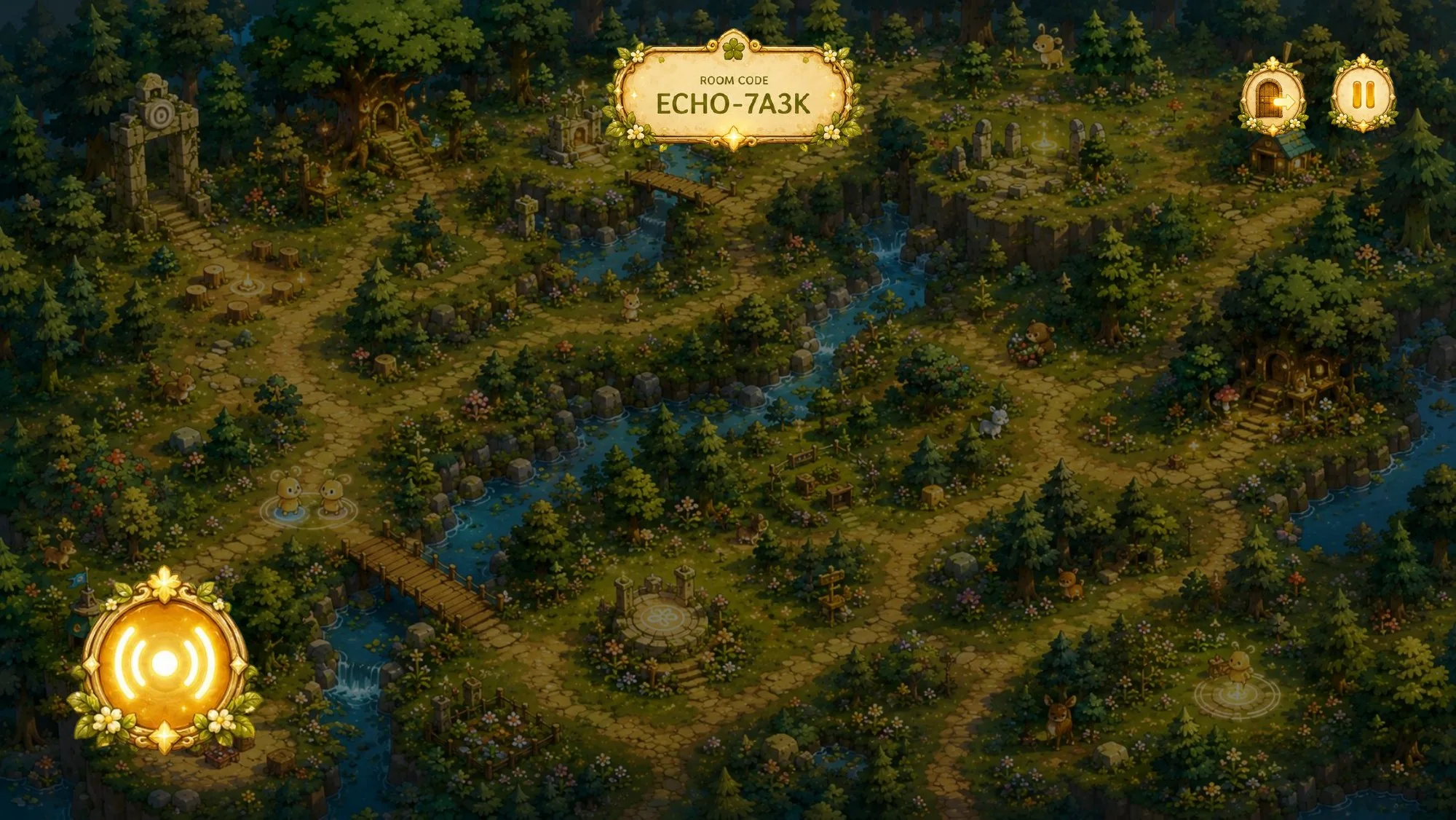
The map is roughly circular, with no entrance, no walls and no marked route. Each child can walk, look around and send a single signal, and the creatures resting in the landscape respond to it.
One signal makes a creature stir; two signals in the same place wake it fully.
Interface
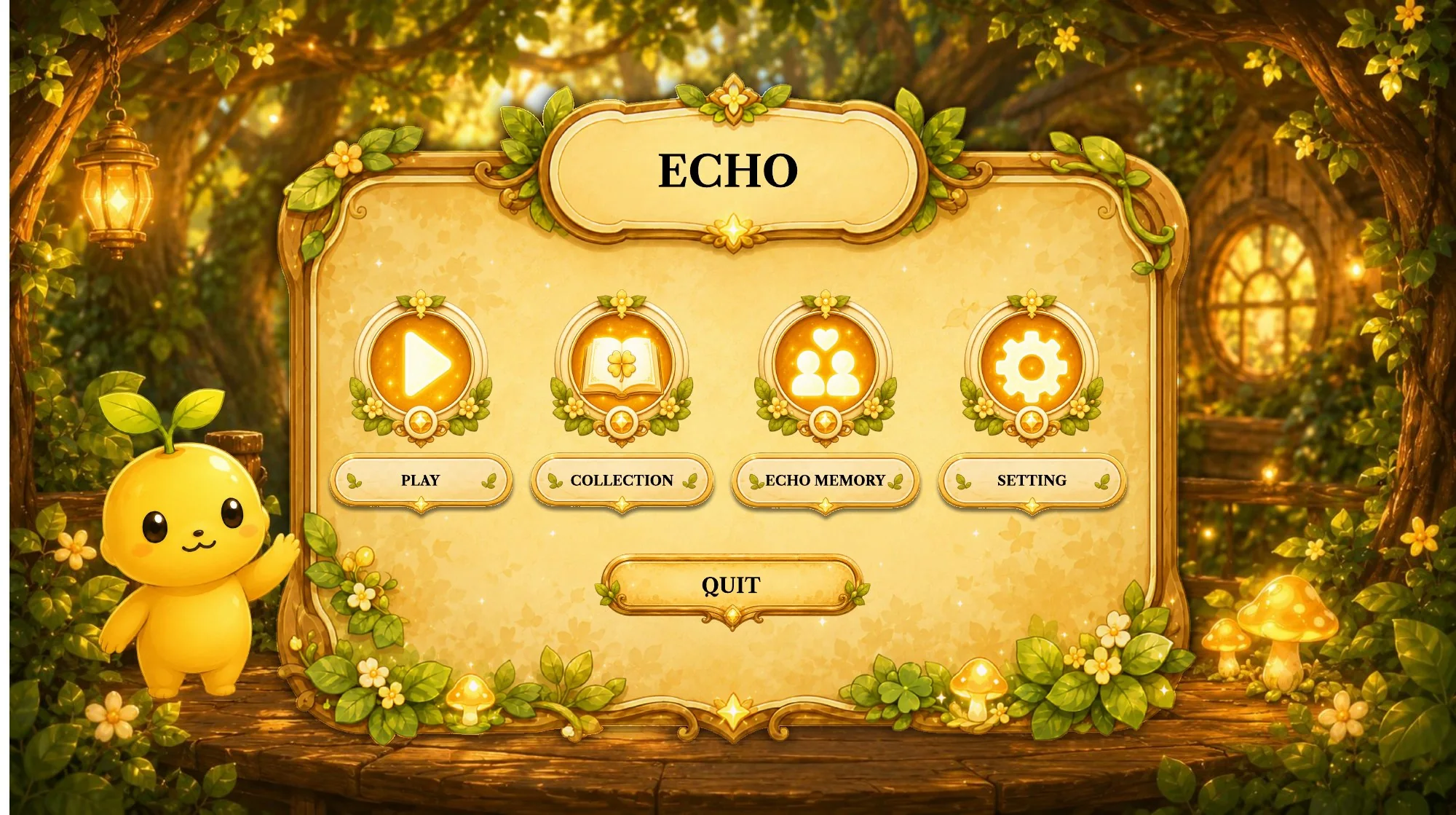
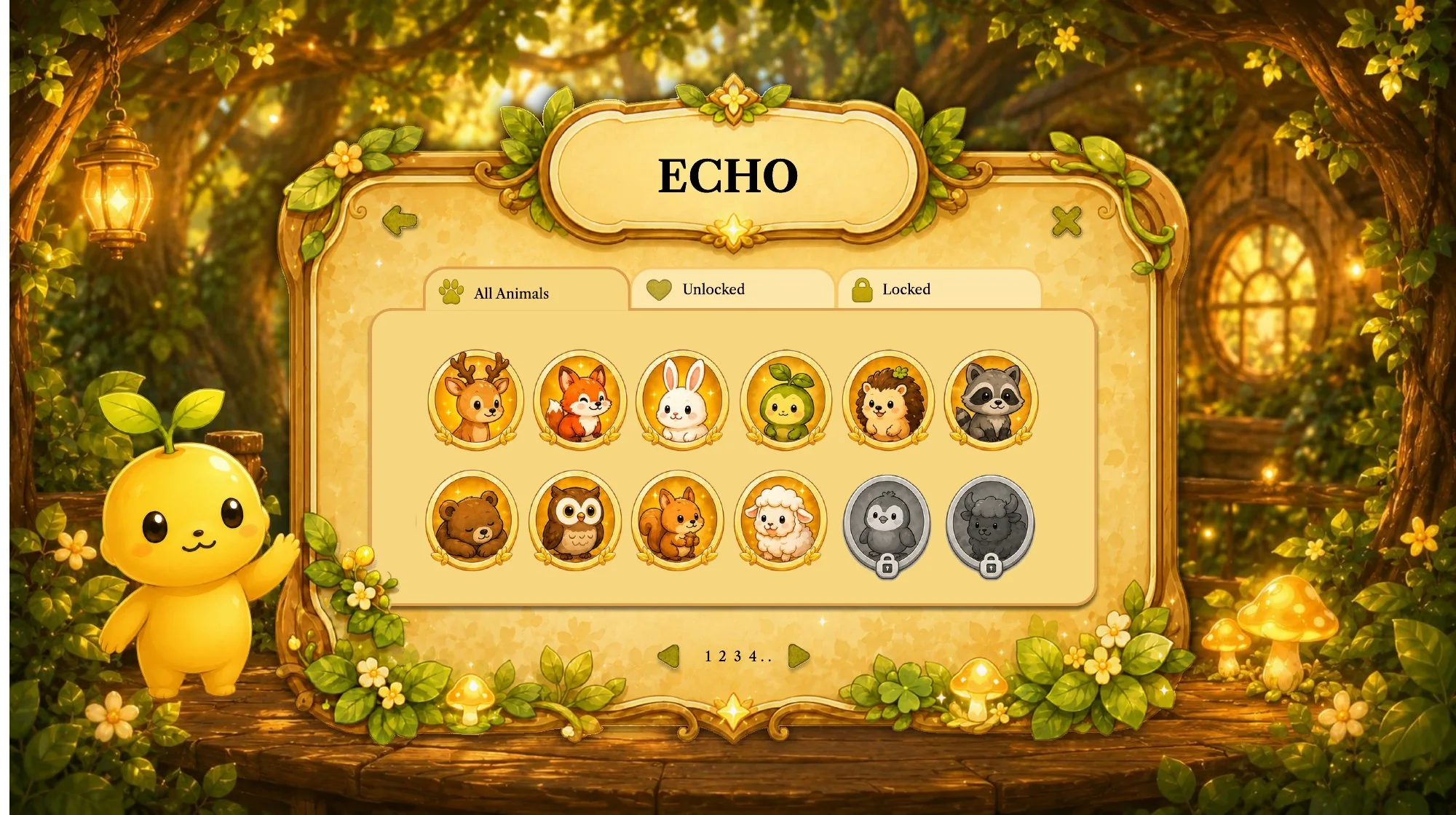
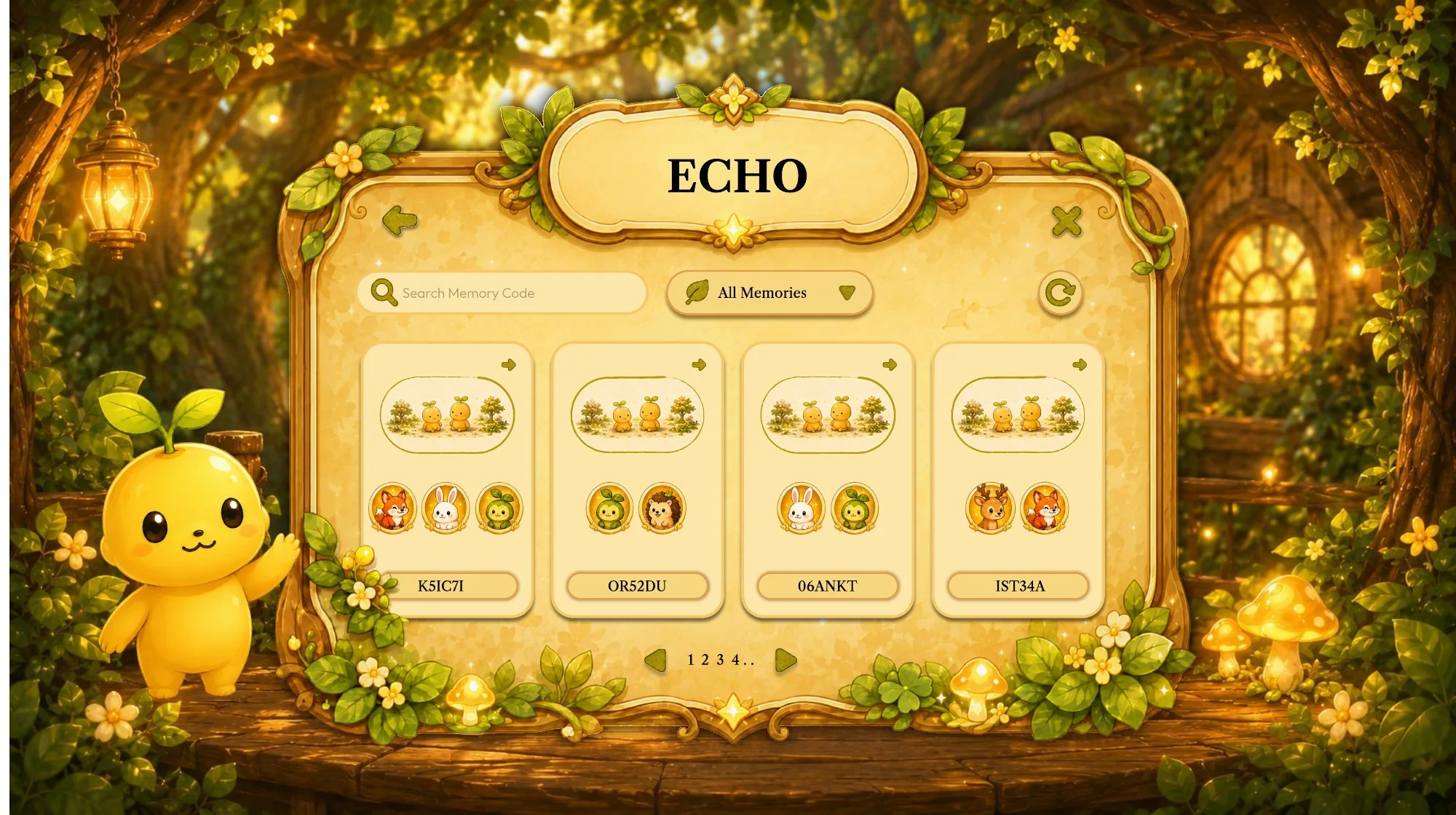
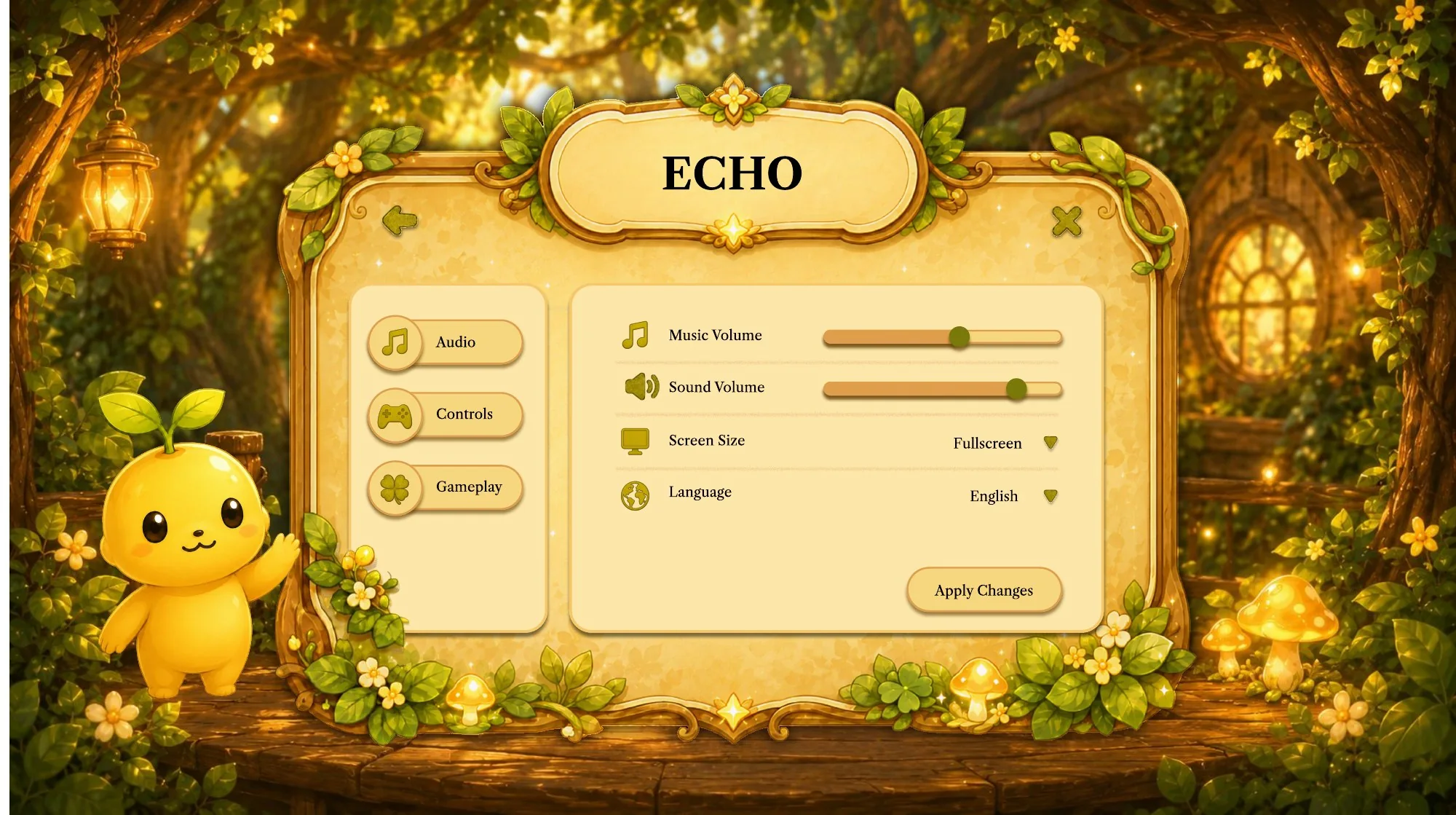
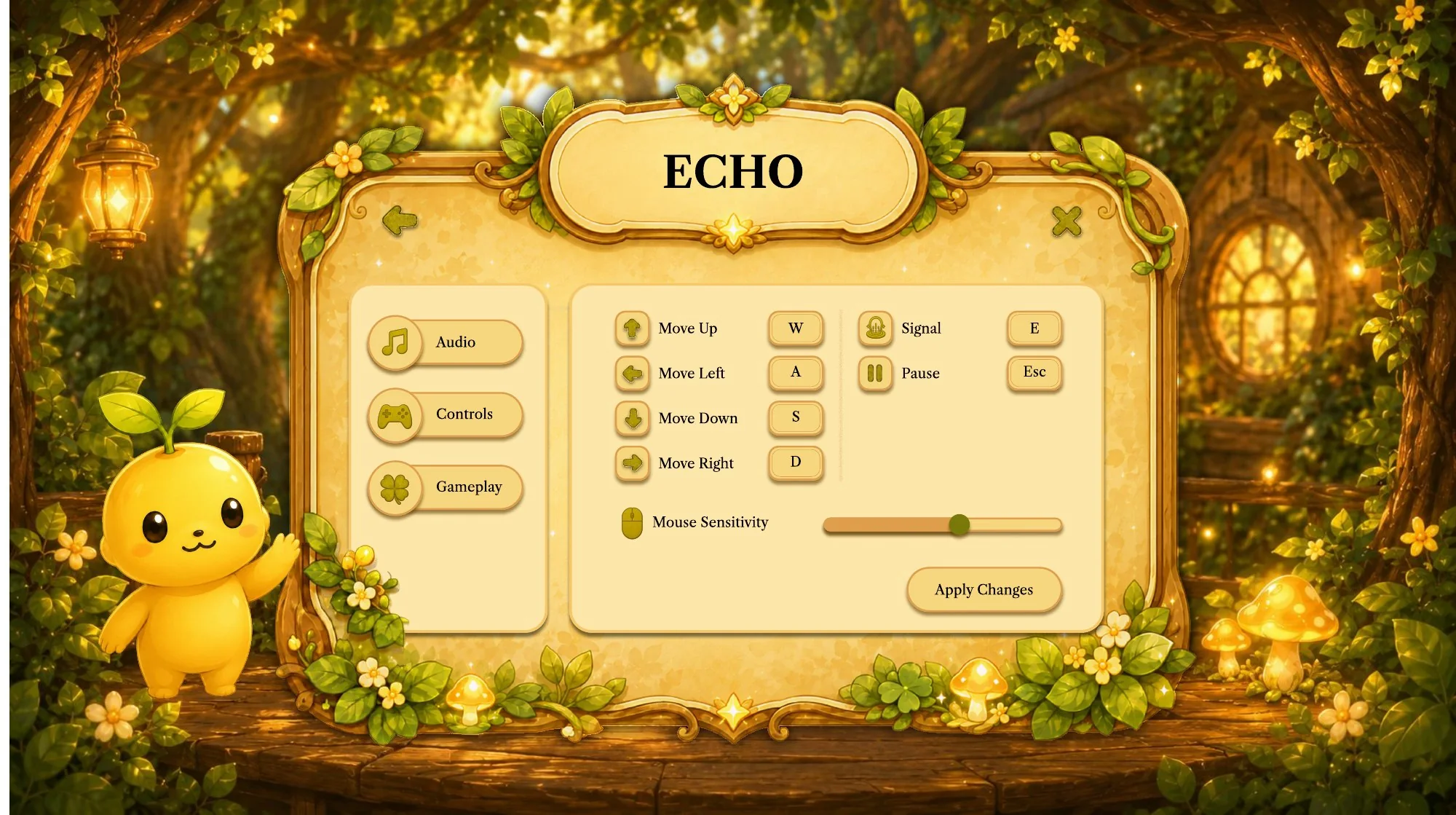
Menus that feel like part of the forest.
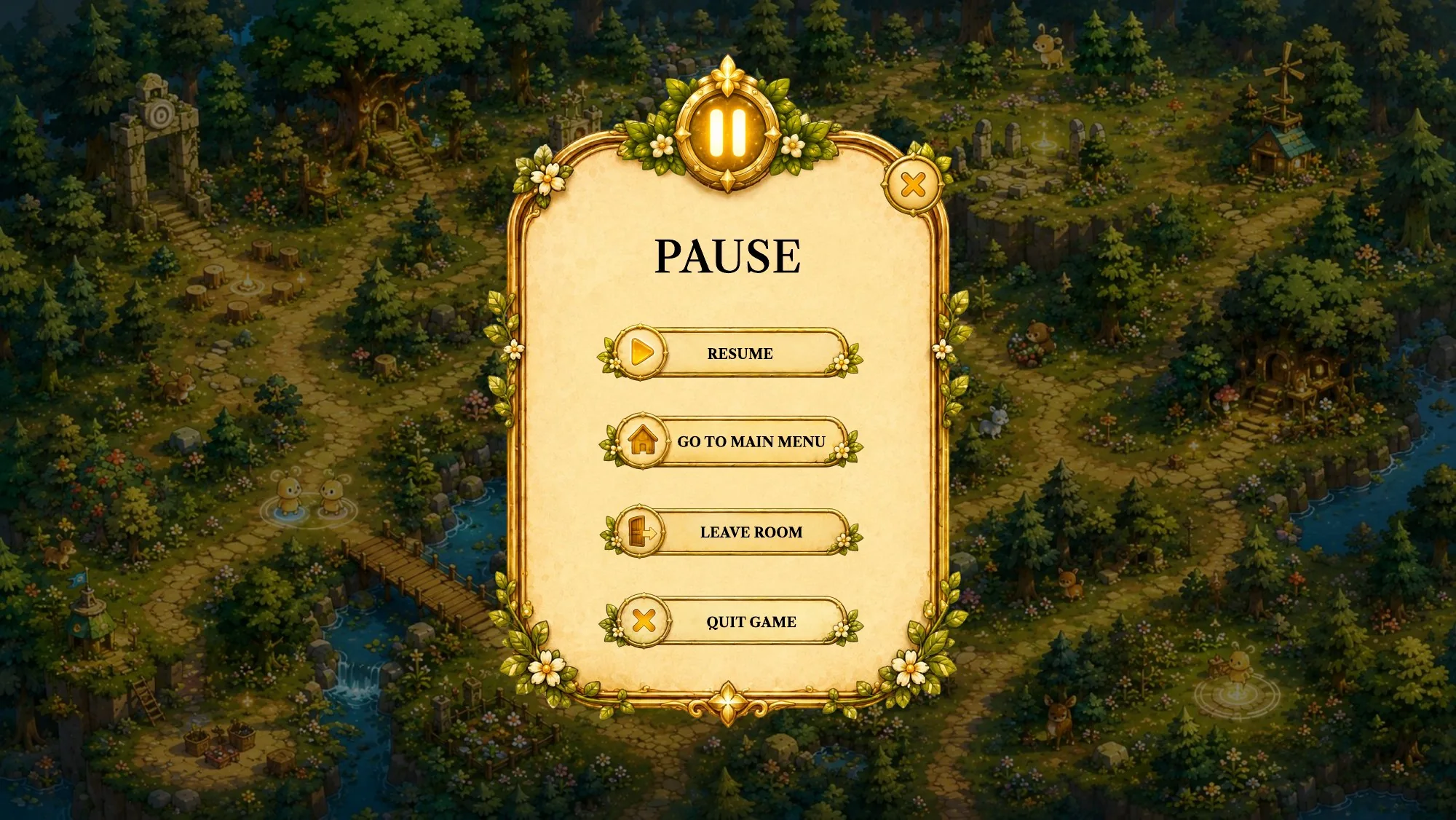
Menus sit on a warm, hand-crafted board inside the forest. During play, the screen holds only what a child needs: the room code, the signal and a way to pause.
Evaluation
Two play sessions, each pairing a child with ADHD and a neurotypical peer.
Uninstructed interaction emerged in both sessions, most clearly in a six-minute stretch of wordless, coordinated movement during the second.